
Reviewed September 2026 by Mortgage Maestro Group
If a lender already sent you a Loan Estimate, or already sent you a denial, you do not have to take either one at face value. An initial second opinion from a broker who did not write the loan is free and carries no obligation to switch lenders. Below is what we check, who this is for, and how to send us what you have.
Key Takeaways
- Mortgage Maestro Group offers a free, no-obligation Loan Estimate audit for Colorado home buyers and refinance borrowers, whether you are mid-shopping, already approved, or were just denied elsewhere.
- A second opinion starts with a brief conversation about your quote, goals, and deadline, and most often catches problems in discount points, origination fees, and third-party costs that a borrower reading the form alone would likely miss.
- Getting a second opinion does not obligate you to switch lenders, and shopping multiple Loan Estimates inside a focused window counts as a single inquiry on your credit report.
- Mortgage Maestro Group is a veteran-owned, independent mortgage brokerage based in Denver, Colorado, licensed in Colorado, California, Wyoming, Texas, and Florida. NMLS #1838215.
What Is a Mortgage Second Opinion?
A mortgage second opinion is a review of your current Loan Estimate, Closing Disclosure, or denial letter by a broker who did not originate the loan, done to check whether the rate, fees, and structure you were offered are actually competitive and correctly calculated. It is not a sales pitch and it does not require you to apply anywhere.
A second opinion typically looks at five things:
- Whether the rate and any discount points you are being charged for it actually make sense for your timeline
- Whether the lender fees in Section A are in line with what is normal, or padded
- Whether the third-party costs in Sections B and C are competitively priced
- Whether the loan program fits your actual financial picture, not just the one the first lender happened to offer
- If you were denied, what specifically triggered it and whether that reason is fixable somewhere else
What We Check in a Free Loan Estimate Audit
I see the same handful of issues over and over. Here is the actual breakdown of where I look, section by section.
| Loan Estimate Section | What We Audit | Where Borrowers Usually Lose Money |
|---|---|---|
| Section A: Origination Charges | Processing, underwriting, and application fees | Duplicate junk fees split across categories, or an origination charge that runs above what is typical for the loan amount |
| Section A: Discount Points | The upfront cost to buy down your rate | A break-even timeline that does not pencil out if you plan to move or refinance before it pays back, see the worked example below |
| Sections B and C: Title, Appraisal, Credit Report | Third-party vendor charges, shoppable and non-shoppable | Vendors marked up above what they actually charge, or a vendor list that was never actually shopped |
| Section J: Lender Credits | Credits applied toward your closing costs | A “no closing cost” structure that is really just a higher rate for the life of the loan, without anyone saying so plainly |
To compare offers fairly, we review the pricing date, loan amount, loan type, lock period, discount points, lender credits, and lender-controlled charges. We also review how seller contributions are allocated and consider the costs alongside how long you expect to keep the loan.
A worked example: when a discount point is not worth it
Here is the math on a composite file I reviewed recently, with the numbers adjusted but the structure exactly as it happened. The borrower had a $500,000 loan estimate that charged 1.75 discount points, $8,750, to lower the rate by three-eighths of a percent. That bought them about $115 a month in payment relief, a 76-month breakeven. They told me on the intake call that they expected to sell or refinance within five years. Paying $8,750 today to break even in year six and a half does not make sense for a five-year plan, so we restructured the same loan with a small lender credit instead and put that $8,750 toward the down payment. Nothing about their qualification changed. The math changed, because somebody actually ran it against their timeline instead of just quoting the lowest rate on the sheet.
A VA second opinion with a meaningful monthly difference
A recent VA buyer contacted Mortgage Maestro Group while under contract on a $680,000 home, with closing scheduled in 30 days. He already had financing lined up and wanted to understand whether the proposed terms made sense.
The buyer qualified for a VA funding-fee exemption and was financing $680,000. We reviewed his existing quote alongside options available through our wholesale lending partners, including the rate, discount points, lender fees, and available seller concessions.
We secured a lower locked rate and structured the seller concessions to cover the discount points, lender fees, and title fees. The comparison showed approximately $461 less in monthly principal and interest.
The structure allocated more money toward discount points to reduce the ongoing payment. That tradeoff matters: we evaluate both the upfront costs and the monthly benefit when helping a buyer compare options.
Over seven years, the payment difference would provide approximately $38,700 in additional cash flow if the buyer kept the loan. Alternatively, by continuing to pay the originally budgeted amount and directing the difference toward principal each month, the buyer could owe approximately $48,100 less after seven years than by making only the new loan’s required payments.
These are two different uses of the same monthly difference. The projected benefits should not be added together.
Historical comparison using two $680,000, 30-year fixed-rate VA loan options and MMG pricing dated October 1, 2026. Payment differences reflect principal and interest only. Seven-year figures are projections, assume the loan remains in place, and exclude upfront transaction-cost differences. The principal-reduction illustration assumes consistent monthly extra payments. Individual results and available terms vary.
Our pledge is straightforward: if your existing financing is competitive and fits your goals, we will tell you. If we identify an opportunity to improve it, we will explain the costs, tradeoffs, and next steps.
As a veteran-owned independent mortgage broker based in Denver, we want you to move toward closing with clear information and confidence in your decision.
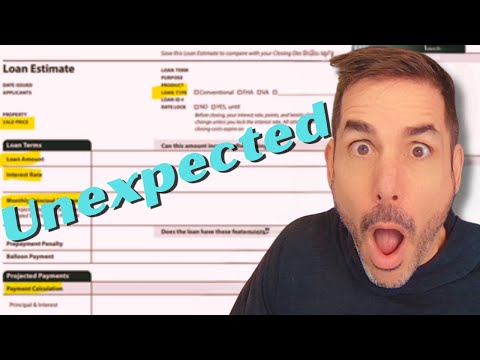
Watch: How to Read Your Loan Estimate
I walk through this same breakdown on video, section by section, so you can follow along with your own Loan Estimate in hand.
Who Benefits Most From a Second Opinion?
This is not just for people who were denied. I see five situations most often.
- You were recently denied by another lender. Most late-stage denials are a program mismatch, not a reflection on you, one lender’s overlays are not the industry’s rules. We walk through exactly why in a companion article, and we will tell you plainly whether your file is fixable.
- You already have a Loan Estimate and want to know if it is fair. This is the most common reason people call us, and it is the fastest audit to run since the numbers are already in front of us.
- You are self-employed with income that does not fit neatly into a W-2 box. Tax returns, K-1s, and bank statement programs all calculate qualifying income differently, and the wrong calculation is the single most common cause of a denial we can actually fix. The same mismatch shows up as a softer no, too: an approval for less than you actually need to make the deal work. Before you assume that is a hard ceiling, it is worth finding out whether it is really a miscalculation instead.
- You are using your VA loan benefit. As a veteran-owned firm, this is a benefit we make sure clients use fully, including true zero-down financing, not partially.
- You are already approved but closing feels rushed. A second set of eyes before you sign is free and carries no obligation to switch lenders. It either confirms you got a fair deal, or it catches something while there is still time to act on it.
How the Free Audit Works
Start with a brief conversation about your quote, goals, and deadline. We’ll confirm what documents we need and when we can complete the review. An initial second opinion is free and carries no obligation to switch lenders. Detailed qualification or a new financing proposal may require an application and supporting documents.
- Send it messy. Your Loan Estimate, denial letter, or Closing Disclosure, however you have it. Do not wait until it is organized, a photo from your phone is fine.
- We review your numbers. Not a form letter, an actual read of your specific numbers against what a competitive file looks like right now.
- You get a plain-language side-by-side. What is competitive, what is not, and what the fix would look like if there is one.
- You decide, no pressure. If the answer is that your current lender’s offer is solid, you will hear that. We are not trying to manufacture a reason for you to switch.
I always tell clients the same thing on the first call: sending it messy beats waiting until it is organized. The analysis is a guideline question, not a filing question, and the faster it is in front of me, the more days remain to act on it if there is something to act on.
Colorado Context That Changes the Math
A generic national calculator will not catch Colorado-specific line items that regularly move a Loan Estimate or a debt ratio. Metro district taxes in Green Valley Ranch, Central Park, Reunion, and much of northern Douglas County add a mill levy assessment that a generic tax estimate misses. CHFA down payment assistance requires the loan sit with a CHFA participating lender and carries its own overlays. And a meaningful share of downtown Denver and older suburban condo projects are non-warrantable, which conventional and FHA financing decline but portfolio and non-QM lenders often accept. Here’s what I’d do if this were my file: pull the actual county tax figure and the condo project’s questionnaire before trusting any Loan Estimate’s estimate on either one.
Frequently Asked Questions About Mortgage Second Opinions
Will getting a second opinion affect my credit score?
Barely, and far less than overpaying on your loan for the next thirty years. FICO’s mortgage scoring models treat multiple mortgage inquiries made within a short shopping window, typically fourteen to forty-five days depending on the model, as a single inquiry. A second opinion on a Loan Estimate you already have often does not require a new credit pull at all.
Can I switch mortgage lenders after receiving a Loan Estimate?
Yes. Receiving a Loan Estimate does not obligate you to close with that lender, and there is no penalty for switching before closing. Most of your paperwork, pay stubs, tax returns, and bank statements transfer directly to the new file, so switching is faster than most borrowers expect.
What documents do I need for a mortgage second opinion?
Send your most recent Loan Estimate or denial letter, your purchase contract if you have one, and any conditions list from the lender. You do not need it organized. Send it as-is, and we’ll confirm what else we need and when we can complete the review.
Does a mortgage second opinion cost anything?
No. The Loan Estimate audit is free and comes with no obligation to switch lenders or move forward with Mortgage Maestro Group.
What if the audit finds nothing wrong with my current Loan Estimate?
Then you will hear that plainly, and you will have the confidence of knowing a second set of eyes confirmed it. We tell clients the truth whether it helps our business or not, that is the whole point of an independent second opinion.
I was already denied by another lender. Is a second opinion still worth it?
Often, yes. Most denials come from one lender’s overlays, meaning additional rules layered on top of standard guidelines, rather than from the borrower being uncreditworthy. A different lender reading the exact same file under different guidelines can reach a different answer. Send the denial letter and we will tell you plainly whether yours is one of the fixable ones.
Who’s Reviewing Your File
Ray Williams is a U.S. Navy veteran with more than 25 years in the mortgage industry and the founder of Mortgage Maestro Group, an independent brokerage he started in February 2019 on the principle that a mortgage should be treated like it is his own. Mortgage Maestro Group is licensed in Colorado, California, Wyoming, Texas, and Florida under NMLS #1838215, with its office at 387 N Corona St #646, Denver, CO 80218.
Get Your Free Second Opinion
Answer a few quick questions and send us what you have. We will read it and tell you straight what we see, no pressure and no obligation.
· Mortgage Maestro Group · NMLS #1838215 · 387 N Corona St #646, Denver, CO 80218