
Mortgage Maestro Group helps Colorado real-estate investors and owner-occupants evaluate Colorado STR financing and other rental-property options for short-term and long-term rentals. As a veteran-owned independent mortgage broker, we can compare eligible options available through our wholesale lending partners, including DSCR, conventional, portfolio, bank-statement and selected interest-only programs. Therefore, the appropriate financing depends on the property’s location, permitted use, projected or existing rental income, ownership structure and your goals.
Written by Ray Williams, founder of Mortgage Maestro Group (NMLS #216267), a U.S. Navy veteran with more than 20 years of mortgage experience who owns two short-term rental properties. Last reviewed October 2026.
Discuss Your Investment Property Scenario
Choose Your Rental Strategy
Guests usually book short-term rentals (STRs) by the night through platforms such as Airbnb and Vrbo. In contrast, owners typically lease long-term rentals (LTRs) to tenants for a year at a time. Therefore, the strategy you choose changes which loans fit, how a lender looks at income and what you need to verify before you buy.
Colorado STR Financing Versus LTR Financing: What Changes
For instance, the same house can be underwritten very differently depending on how it will be rented. Specifically, these are the areas where STR and LTR financing most often diverge.
Qualification and property factors
| Factor | Short-term rental (STR) | Long-term rental (LTR) |
|---|---|---|
| Income documentation | Booking history, platform statements or, for some programs, a projection of short-term income | Existing leases, tax returns or an appraiser’s market rent estimate |
| Seasonality | Revenue can swing sharply by month, especially in mountain markets | Rent is usually steady month to month |
| Rent analysis | May rely on comparable STR data or a lender-approved revenue estimate | Usually a rent schedule completed with the appraisal |
| Property eligibility | Some lenders restrict condotels, rural acreage, unique dwellings or properties without year-round access | Generally, standard residential properties are widely eligible |
| Reserves | Lenders may require more months of reserves because income varies | Reserve requirements are often lower |
Operational, licensing and ownership factors
| Factor | Short-term rental (STR) | Long-term rental (LTR) |
|---|---|---|
| Management expenses | Cleaning, supplies, platform fees and management can be significant | Management is usually a smaller percentage of rent |
| Occupancy | Measured as booked nights, which fluctuates | Measured by lease term and tenant turnover |
| Licensing | Many Colorado jurisdictions require an STR license or permit, and some limit who can get one | For example, some cities require a rental license, including Denver |
| Insurance | Requires coverage written for short-term rental use, and some counties set minimums | Typically, a standard landlord policy is common |
| Exit strategy | License rules, caps and transfer limits can affect resale value | Resale depends mostly on the conventional housing market |
| LLC ownership | Often possible with DSCR and non-QM programs, but some local licenses must be held by a natural person | Often possible with DSCR and non-QM programs; conventional loans generally close in an individual’s name |
STR financing in brief
For a short-term rental, the first question is legal: can this exact property operate as an STR, and can you, as the owner, hold the required license? Therefore, only then does financing come into focus. For example, DSCR and other investor programs may qualify the property using documented booking history or, in some cases, projected short-term income. In addition, expect lenders to look closely at reserves, insurance, property type and year-round access.
LTR financing in brief
By comparison, for a long-term rental, lenders usually rely on an existing lease or the appraiser’s market rent estimate. Meanwhile, borrowers with strong documented income may compare conventional investment financing with DSCR loans. In addition, self-employed borrowers may consider self-employed and bank-statement options.
Comparing Rental Property Financing Paths
Wholesale lenders, rather than Mortgage Maestro Group, offer every path below, and terms vary by program. Therefore, use this as a starting map, not a guarantee of availability.
| Financing path | Qualification focus | LLC closing | Potential STR use | Major considerations |
|---|---|---|---|---|
| DSCR | Property cash flow | Often available | Often available when legally permitted | DSCR calculation, leverage, reserves, appraisal rents and prepayment terms |
| Conventional investment | Borrower income and liabilities | Generally individual vesting at closing | Property and occupancy rules apply | Personal DTI, reserves and agency eligibility |
| Owner-occupied financing | Borrower income and genuine primary occupancy | Generally not an LLC closing | Only where local rules and loan terms permit | Occupancy commitment and local licensing |
| Bank-statement | Borrower cash-flow documentation | Program-specific | Program-specific | Expense factors, documentation and reserves |
| Portfolio/non-QM | Lender-specific analysis | Often available | Program-specific | Liquidity, property eligibility, pricing and exit strategy |
| Interest-only | Program-specific qualification | Available in selected investor programs | Program-specific | Payment change, principal balance, total cost and exit strategy |
In particular, conventional investment loans can work well for long-term rentals when your personal income supports the payment. However, agency rules for using rental income are specific, which can make projected short-term income hard to count. For more on non-QM options, see our non-QM guide and our overview of conventional loans.
How DSCR Financing Works
A debt service coverage ratio (DSCR) loan focuses on whether the property’s rental income can carry its own housing expense. In general terms, a lender compares qualifying rental income with the monthly housing payment, which usually includes principal, interest, property taxes, insurance and any HOA dues. For example, a result above 1.00 suggests the income covers that payment. By contrast, a result below 1.00 means it does not, although some programs still lend below 1.00 with tighter terms.
Why lender calculations differ
Importantly, there is no single DSCR formula that every lender uses. For instance, lenders differ on which rent figure counts, whether they discount gross STR revenue for vacancy or expenses, whether they use the appraiser’s rent estimate or the actual booking history, and which minimum ratio applies to which leverage tier. Therefore, two lenders can look at the same property and reach different answers.
What shapes a DSCR approval
- Property type: lenders treat single-family homes, condos, small multifamily and rural or unique properties differently.
- Leverage: a larger down payment can open more programs or improve terms.
- Credit: minimum scores and pricing adjustments vary by lender.
- Reserves: lenders often require several months of payments in liquid assets, sometimes more for STRs.
- Appraisal rent analysis: the appraiser’s rent estimate can change the ratio after you apply. Our article on why a DSCR quote may not survive the appraisal explains this in more detail.
How projected STR income is treated
Some lenders accept a short-term revenue projection from an approved data source or appraisal addendum. However, others require 12 months or more of actual booking history, and some will only use long-term market rent. Nevertheless, a favorable revenue projection does not guarantee loan approval. In addition, the lender still evaluates the property, the borrower, reserves and the full file. If you are buying your first rental, our article on using a DSCR loan for a first rental may help.
Can an Investment Property Close in an LLC?
Many DSCR and non-QM investment-property programs permit an eligible LLC to take title, frequently with personal guarantees from the applicable members. Eligibility, vesting requirements, pricing and documentation vary by lender and program. Therefore, borrowers should consult qualified legal and tax professionals about entity structure, liability and tax treatment.
In contrast, conventional owner-occupied financing generally closes in the names of the individual borrowers who will live in the home. Moreover, entity ownership can affect local licensing. For example, Arvada’s current rules issue new STR permits in the name of a natural person who holds an ownership interest, rather than in the name of an entity. Check the license rules before you decide how to take title.
Colorado STR Location and Licensing Considerations
Whether a property can operate as an STR depends on the exact jurisdiction that governs it, not the county name on a listing. For example, an incorporated city sets its own STR rules, separate from the surrounding county. A Jefferson County mailing address, for example, does not necessarily mean unincorporated Jefferson County rules apply. Accordingly, the tables below summarize what each official source said when we checked it.
Denver and Jefferson County
| Jurisdiction | Primary residence or owner occupancy | Non-owner-occupied availability | License or permit | Important operational requirements | Official source | Last verified |
|---|---|---|---|---|---|---|
| Denver (City and County) | Required. The rental must be the host’s primary residence under Denver’s definition. | Not available for STR licensing | STR license required before hosting | Denver applies its own primary-residence test; claiming residence elsewhere does not by itself qualify. Longer rentals need a residential rental property license. | Denver short-term rentals | October 2026 |
| Unincorporated Jefferson County | Primary-residence licenses are available | Allowed, limited to one non-primary STR per owner, subject to a cap of 1% of dwelling units per fire protection district and a 750-foot separation | Annual STR license from Jefferson County Planning and Zoning | Occupancy limits, off-street parking per bedroom, a local representative within 30 minutes, septic and well documentation, safety equipment and minimum liability insurance | Jefferson County STRs | October 2026 |
Park and Clear Creek Counties
| Jurisdiction | Primary residence or owner occupancy | Non-owner-occupied availability | License or permit | Important operational requirements | Official source | Last verified |
|---|---|---|---|---|---|---|
| Park County | The county page does not state a primary-residence requirement | Not restricted on the county page; review Ordinance 2026-001 for current terms | STR permit required for all STRs, applied for online | One-hour responsible agent response, no parking on county roads, septic documentation, Colorado sales tax license and inspections in some cases | Park County STRs | October 2026 |
| Unincorporated Clear Creek County | Primary-resident licenses are available for seasonal whole-home or partial-home rental | Allowed through a capped standard license, with a waitlist when the annual cap is reached | STR license required | Safety inspection, proof of legal water and sewage, STR-specific insurance and lodging and sales tax collection | Clear Creek County STRs | October 2026 |
Arvada and Westminster
| Jurisdiction | Primary residence or owner occupancy | Non-owner-occupied availability | License or permit | Important operational requirements | Official source | Last verified |
|---|---|---|---|---|---|---|
| City of Arvada | Not required. A permit may be for a primary or a non-primary residence. | Allowed, with one STR permit per lot; new permits are issued to a natural person with an ownership interest | STR permit and a city business license | Occupancy limits, parking rules, a 240-night annual limit, a 24/7 hotline with one-hour noise response and a third-party property inspection | Arvada STRs | October 2026 |
| City of Westminster | The city page does not state a primary-residence requirement | Not restricted on the city page; each applicant may operate only one licensed STR in the city at a time | City STR license plus a business and sales tax license | Life-safety affidavit, accommodations tax and HOA compliance; see the Westminster Municipal Code for full rules | Westminster STRs | October 2026 |
STR rules, license availability and local requirements can change. Mortgage Maestro Group does not provide zoning, legal or tax advice.
Denver has material primary-residence restrictions, so a non-owner-occupied Denver property generally cannot be licensed as an STR. Owner-occupants in Denver may have a pathway when the home is genuinely their primary residence. However, several surrounding jurisdictions allow or contemplate non-primary-resident STR operations, subject to licenses, caps, zoning and other requirements. None of this guarantees that a particular property can obtain a license. Therefore, before you make an offer, verify the exact municipality or county, the zoning district, HOA or deed restrictions and current license availability, including any cap or waitlist.
Owner-Occupied STR Considerations
Some buyers plan to live in a home and rent part or all of it on a short-term basis. That can be a legitimate strategy. However, it involves two separate sets of rules that do not substitute for each other.
- Genuine primary occupancy: owner-occupied loans commonly require you to move in within a set period and intend to live there as your primary residence, often for at least a year. Ultimately, the loan documents control.
- Renting a room, ADU or permitted portion: some jurisdictions allow an owner to rent a bedroom, a permitted accessory dwelling unit or another portion of the home while living there. However, others limit this, and ADU rules vary.
- Renting the whole home while you are away: where local rules allow it, an owner may rent the entire primary residence during temporary absences. Clear Creek County’s primary-resident seasonal license, for example, limits the number of rental days.
- Mortgage occupancy versus local licensing: qualifying for an owner-occupied loan does not mean the city or county will issue an STR license, and holding an STR license does not mean a lender will treat the home as owner-occupied. Each is evaluated under its own rules.
Therefore, do not represent a property as owner-occupied unless you genuinely intend to meet the applicable occupancy requirements. Misstating occupancy on a mortgage application can have serious legal and financial consequences.
Prepayment Penalties on Investor Loans
Many DSCR and other investor loans include a prepayment penalty. Investors often fund these loans with pricing that assumes the loan will remain outstanding for a period. As a result, a penalty helps protect that expected return. In exchange, a loan with a penalty may carry better pricing than the same loan without one.
Common structures
Lenders often set penalties for a fixed number of years, and the charge may decline over time. For example, a percentage may step down each year until it disappears. Some programs use a flat percentage for a set term, and some offer no penalty at a different price. These are examples, not a universal schedule.
What can trigger a penalty
For example, depending on the note, a full payoff from a sale or refinance can trigger the penalty, and so can a large principal reduction. Some notes allow a limited amount of extra principal each year without a penalty. Therefore, the exact promissory note and prepayment rider control, so read them before closing.
How a penalty affects your strategy
If you plan a short hold, a renovation and refinance, or a sale within a few years, a multi-year penalty can cost real money. As a result, compare the penalty against the pricing difference and your intended hold period. Consequently, a slightly higher rate with a shorter or no penalty can be the better choice when your exit is near.
Interest-Only Financing for Rental Properties
Interest-only financing can be a viable cash-flow strategy when a borrower selects it deliberately. Specifically, during the interest-only period, the scheduled payment covers interest but not principal, which lowers the early payment compared with a fully amortizing loan.
When it can make sense
- Preserving liquidity while you furnish or improve an STR
- Maintaining stronger reserves
- Managing seasonal STR revenue
- Stabilizing or repositioning a property
- Aligning payments with a documented investment and exit strategy
Risks to weigh
- Scheduled interest-only payments do not reduce principal.
- Payments may increase after the interest-only period ends.
- Total interest paid over the life of the loan can be higher.
- A sale or refinance may be required to execute the strategy.
- A lower initial payment does not make a weak investment financially sound.
Guidance From a Mortgage Broker Who Owns and Operates STRs
Ray Williams founded Mortgage Maestro Group and is a U.S. Navy veteran with more than 20 years of mortgage experience. He also owns two short-term rental properties. Therefore, that experience gives him a practical view of how financing, acquisition, positioning and day-to-day operations connect, which he brings to investor conversations.
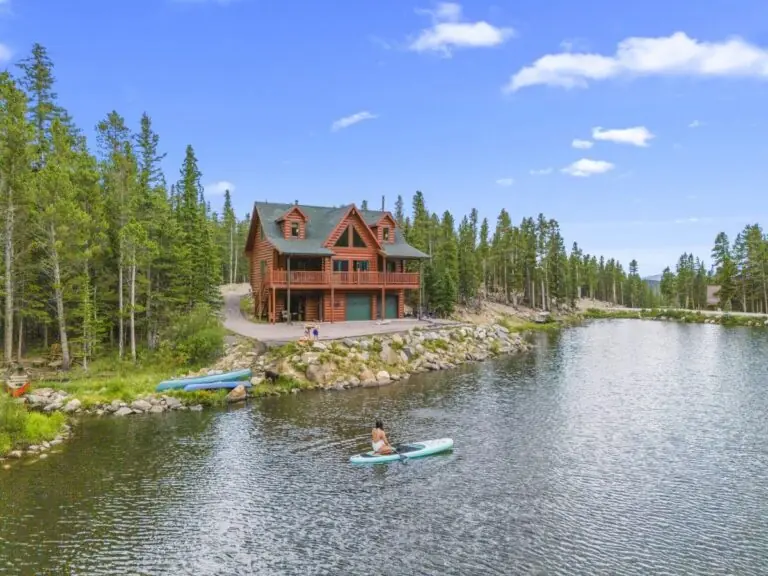
His most recent acquisition was a cabin near St. Mary’s Glacier in Clear Creek County. Ray identified it as an underperforming STR and developed a strategy intended to improve nightly rates and revenue through property selection, amenities, positioning and guest experience. You can see the property here: St. Mary’s lake cabin on Airbnb. However, the listing’s host and management details are shown on Airbnb and may not name Ray.
Therefore, lessons from that kind of acquisition apply to many investors:
- Confirm the governing jurisdiction and license pathway before you fall in love with a property.
- Look for the gap between how a property is positioned today and what its location and guest segment could support.
- Budget for furnishing, amenities and the first season, not just the down payment.
- Choose financing that fits the plan, including the prepayment terms and any interest-only period.
Case Study: Repositioning a St. Mary’s Glacier Cabin
Photos: Ray Williams, owner.
Acquisition thesis
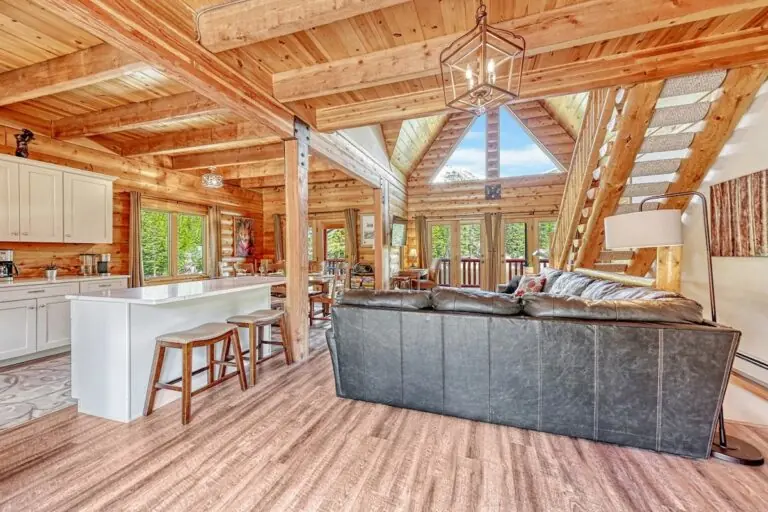
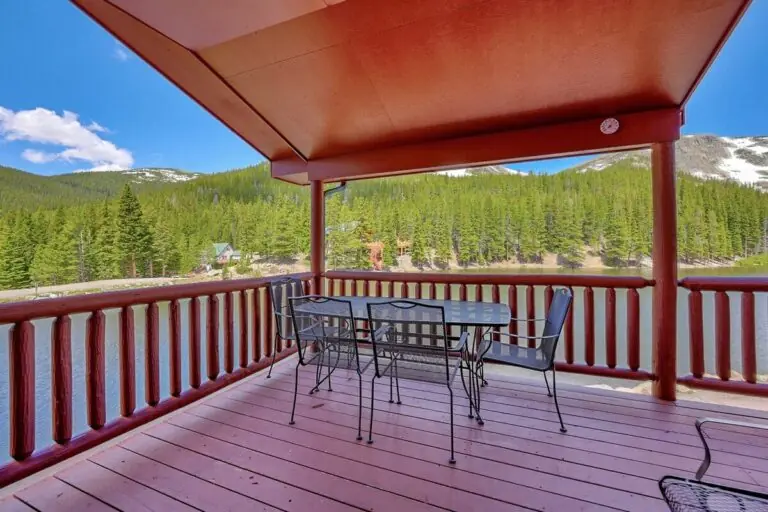
Ray bought the cabin in July 2024. It had the fundamentals that mountain guests look for: a lakefront setting near St. Mary’s Glacier, room for families and groups, and easy access from the Denver metro area. Its pricing and amenities had not caught up with that location, so the plan was to reposition the property rather than simply operate it as it was.
Why it looked under-positioned
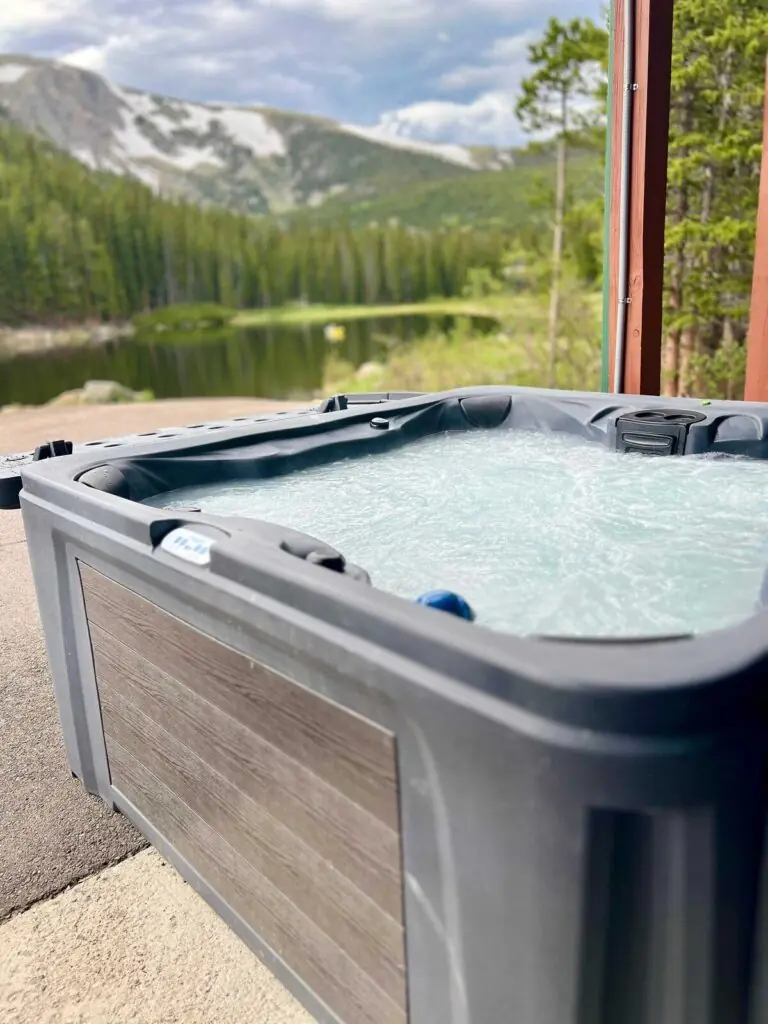
The cabin lacked amenities that guests expect at higher nightly rates, such as a hot tub, and part of the garage was unused space that guests could not enjoy.
Guest segment
Families and groups visiting for skiing, hiking, the lake and time in the mountains, with a growing focus on guests looking for a wellness-oriented retreat.
Improvements and repositioning
- Completed: a hot tub, at a cost of about $9,500.
- In progress: converting unused garage space into flex space, budgeted at about $10,000 to $11,000. Two bays become a game room and second living area with a shuffleboard table and foosball table. The third bay becomes a wellness room with yoga mats, TRX and kettlebells.
Financing considerations
For this reason, improvements like these need cash beyond the down payment, so reserves and the improvement budget belong in the financing plan from the start. In addition, booking records matter: a documented 12-month rent roll from actual stays is the kind of history a lender can review when evaluating a refinance or a DSCR loan, while a projection alone carries less weight.
Documented results since acquisition
- Average nightly rate for July through October rose about 31% from 2024 to 2025 and about 73% from 2024 to 2026.
- Average nightly rate for June through September rose about 41% from 2025 to 2026.
- Occupancy has averaged about 67% of available nights since acquisition: about 63% from mid-July through December 2024, about 75% in 2025 and about 63% from January through October 2026.
However, the trade-off is visible: as nightly rates rose in 2026, booked nights fell. The garage conversion is designed to give guests more reasons to book at higher rates. Ray’s projection is that the new space, together with rate and occupancy gains, can add about $20,000 in annual revenue. That is a projection, not a result.
First-party case-study data from Ray Williams’ booking records for this property (Airbnb and Vrbo), July 17, 2024 through October 31, 2026, reviewed November 2026. Occupancy is booked nights divided by calendar nights in the period. Average nightly rate is nightly revenue after platform adjustments divided by booked nights, excluding cleaning fees, pet fees and taxes. July 2024 is a partial month. Figures are rounded. Past results and market averages do not predict an individual property’s results.
Rates and Pricing
Investor-property rates vary by program, leverage, credit profile, property cash flow, prepayment structure and other factors. Ask Mortgage Maestro Group to compare currently available options for your scenario.
Request Current Investor Loan Options
Already have a quote from another lender? A mortgage second opinion can help you review the structure and costs before you commit.
Questions to Answer Before You Make an Offer
- Which exact city, town or county governs the property?
- Is STR use legally allowed in that zoning district?
- Is a license available now, or is there a cap or waitlist?
- Do HOA rules or deed restrictions prohibit or limit STRs?
- Can you get STR-appropriate insurance, and at what cost?
- Is the property on a well or septic system, and do they meet county rules?
- What fire and safety requirements apply?
- Is access reliable in winter, and who handles snow removal?
- What occupancy, average daily rate and seasonality are realistic?
- What will management and cleaning cost?
- What is the furnishing and improvement budget?
- How many months of reserves will you hold?
- Which financing structure fits the plan?
- Does the loan carry a prepayment penalty?
- Is there an interest-only period, and when does it end?
- What occupancy and rate do you need to break even?
- How long will you hold, and what is the exit strategy?
Colorado investors may also find our overview of Denver investor loans and our investment property financing page useful.
Frequently Asked Questions
Can I get a DSCR loan for a Colorado short-term rental?
Often, yes, when the property can legally operate as an STR and meets the lender’s property and borrower requirements. DSCR programs qualify mainly on the property’s rental income compared with its housing payment. Lenders differ on how they count STR income, the minimum ratio, reserves and eligible property types, so compare more than one program before you commit.
Can an investment property close in an LLC?
Many DSCR and non-QM investment-property programs permit an eligible LLC to take title, frequently with personal guarantees from the members. Requirements and pricing vary by lender. Conventional owner-occupied loans generally close in the individual borrowers’ names. Some local STR licenses must be held by a natural person, so check licensing before choosing how to take title.
Can I finance an STR that I will also occupy?
Possibly. If the home will genuinely be your primary residence, owner-occupied financing may be available, and some jurisdictions let owners rent a room, an ADU or the whole home while they are away. Loan occupancy rules and local STR licensing are separate, so each must be satisfied on its own terms.
What is the difference between STR and LTR financing?
STR financing looks at nightly rental income, which is seasonal and may be projected, and it often requires more reserves and STR-specific insurance. LTR financing usually relies on a lease or the appraiser’s market rent estimate. Licensing, management costs and exit strategy also matter more for STRs because local rules can limit who may operate them.
Can projected Airbnb or Vrbo income qualify?
Sometimes. Some DSCR lenders accept a short-term revenue projection from an approved data source or appraisal addendum, while others require actual booking history or use long-term market rent instead. Even with a strong projection, the lender evaluates the full file, so a favorable estimate does not guarantee approval.
How is DSCR calculated for an STR?
In general, the lender divides qualifying rental income by the monthly housing payment, including principal, interest, taxes, insurance and any HOA dues. For STRs, lenders may discount gross revenue, average it over 12 months or use a projection. Because methods vary, two lenders can produce different ratios for the same property.
What is a prepayment penalty on a DSCR loan?
A prepayment penalty is a charge for paying off all or a large part of the loan within a set period, often a few years. Penalties commonly decline over time, though structures vary. A sale or refinance can trigger one. The promissory note and prepayment rider control, so weigh the penalty against pricing and your hold period.
Why would an investor choose an interest-only loan?
An interest-only period lowers the early payment, which can preserve cash for furnishing, improvements, reserves or seasonal slow periods. It works best as part of a documented plan. Principal does not decline during that period, payments can rise afterward and total interest can be higher, so the exit strategy matters.
Where near Denver might non-owner-occupied STRs be permitted?
Denver requires STRs to be the host’s primary residence. Unincorporated Jefferson County, unincorporated Clear Creek County and Arvada allow non-primary STRs under licensing limits such as caps, spacing rules or one permit per lot. Park County and Westminster do not state a primary-residence requirement on their official pages. Verify the exact jurisdiction and current license availability first.
What should I verify before purchasing a Colorado STR?
Confirm the governing jurisdiction, zoning, license availability and any cap or waitlist, plus HOA or deed restrictions. Check insurance, water, well and septic, fire safety requirements and winter access. Then test the numbers: realistic occupancy and nightly rates, management costs, reserves, financing terms, prepayment penalty and your exit plan.
Can I use conventional financing for a rental property?
Yes. Conventional investment-property financing can work for eligible short-term and long-term rentals when the borrower’s income, assets, reserves and debt-to-income ratio support the loan. Agency rules determine how rental income may be counted, which can limit the use of projected STR income. DSCR and other non-QM investment-property loans should also be considered because they can be useful depending on the property, income documentation, ownership structure and investment strategy.
Conventional second-home financing may provide another option when the buyer genuinely intends to occupy the property for part of the year and the property meets second-home eligibility requirements. A property financed as a second home is not eligible for DSCR financing. Instead, the borrower must qualify using traditional income and liability analysis. Rental income from the second home generally cannot be used for qualification, and underwriting considers the payment on the property being acquired along with obligations associated with the borrower’s other real estate, subject to any allowable documented rental-income treatment.
Does an STR license guarantee financing approval?
No. A license shows that the jurisdiction allows the property to operate as an STR, but the lender still evaluates the property, its income, your credit, reserves and the loan terms. Likewise, a loan approval does not mean the city or county will issue a license. Both need to line up before you buy.
Talk Through Your Rental Property Plan
Tell us about the property, where it is and how you plan to rent it. We will compare eligible options available through our wholesale lending partners and explain the trade-offs.
Mortgage Maestro Group is a veteran-owned independent mortgage broker operated by Maestro LLC, NMLS #1838215. Ray Williams, NMLS #216267. 387 N Corona St #646, Denver, CO 80218. 303-779-0591. Licensed in Colorado, California, Wyoming, Texas and Florida. Equal Housing Opportunity.
Mortgage Maestro Group is a broker, not a lender. Wholesale lenders offer the loan programs, terms and availability, which remain subject to change and lender approval. This page is educational and is not a commitment to lend. Mortgage Maestro Group does not provide zoning, legal or tax advice. Government sources were last reviewed in October 2026.